

Have you ever heard someone call another person “sheisty” and wondered what they meant? You may encounter this word in text messages, rap lyrics, social media posts, or everyday conversations.
The sheisty meaning centers on dishonesty, shady behavior, and a lack of trust. People use this slang term when someone lies, hides their intentions, breaks promises, or takes advantage of others.
For example, if your friend takes credit for your work, you might call that a sheisty move. The word sounds casual, but it often expresses strong disapproval.
Quick Answer: Sheisty Meaning in Slang
Sheisty is an informal slang adjective that means dishonest, sneaky, shady, or untrustworthy.
- Simple meaning: Shady or dishonest
- Part of speech: Adjective
- Tone: Usually negative and informal
- Synonyms: Shady, sneaky, deceitful, untrustworthy
- Common uses: Friendships, money, relationships, texting, and social media
What Does Sheisty Mean in Everyday Conversations?
The sheisty slang meaning often suggests more than an ordinary mistake. People use the word when someone acts unfairly or deliberately misleads others.
Imagine lending someone money after they promise to repay you on Friday. They ignore your messages, deny making the promise, and continue spending money on unnecessary purchases. You might describe their behavior as sheisty because they have broken your trust.
A sheisty person might also spread private information, manipulate friends, or pretend to support someone while secretly working against them.
However, context matters. Someone can make an honest mistake without acting sheisty. The term usually suggests that a person’s actions appear suspicious, dishonest, or intentionally unfair.
Sheisty vs. Shiesty: What’s the Difference?
People use both sheisty and shiesty to describe shady or dishonest behavior. The two spellings generally share the same slang meaning.
| Word | Meaning |
|---|---|
| Sheisty | Dishonest, sneaky, or unfair |
| Shiesty | Alternative spelling with a similar meaning |
| Shady | Suspicious or questionable |
| Sneaky | Secretive or acting without others’ knowledge |
The spelling shiesty also appears in contemporary hip-hop culture. American rapper Pooh Shiesty uses it as his stage name.
Neither spelling means the same thing as shy, which describes someone who feels nervous or uncomfortable around other people.
Sheisty Examples in Sentences
These examples show how people use the word in everyday conversations.
- “That was a sheisty move.” Someone acted dishonestly or unfairly.
- “He’s been acting sheisty lately.” His recent behavior seems suspicious.
- “Taking credit for my idea was sheisty.” Someone claimed another person’s work.
- “That business deal sounds sheisty.” The deal seems questionable or unfair.
- “Don’t be sheisty with your friends over money.” Don’t cheat or take advantage of your friends.
You can place sheisty before a noun, as in “a sheisty deal,” or after a linking verb, as in “That sounds sheisty.” You can also say “acting sheisty” or “a sheisty move.”
Use the word mainly in casual conversations because formal writing usually calls for more precise language, such as dishonest or unethical.
Sheisty Meaning in Texting, Social Media, and Rap
In texting, people use sheisty to express distrust or criticize someone’s behavior quickly. For example, when a friend writes, “That was kinda sheisty,” they suggest that someone acted unfairly.
On TikTok and Instagram, users may include the word in captions, jokes, reaction videos, or discussions about betrayal and loyalty. Its meaning in Gen Z slang remains connected to shady behavior, although different communities may use it differently.
In rap and hip-hop, shiesty can describe someone who behaves deceptively or acts without honesty. The surrounding lyrics determine the exact meaning, so readers should consider the context rather than assume every use carries the same message.
Origin and Pronunciation of Sheisty
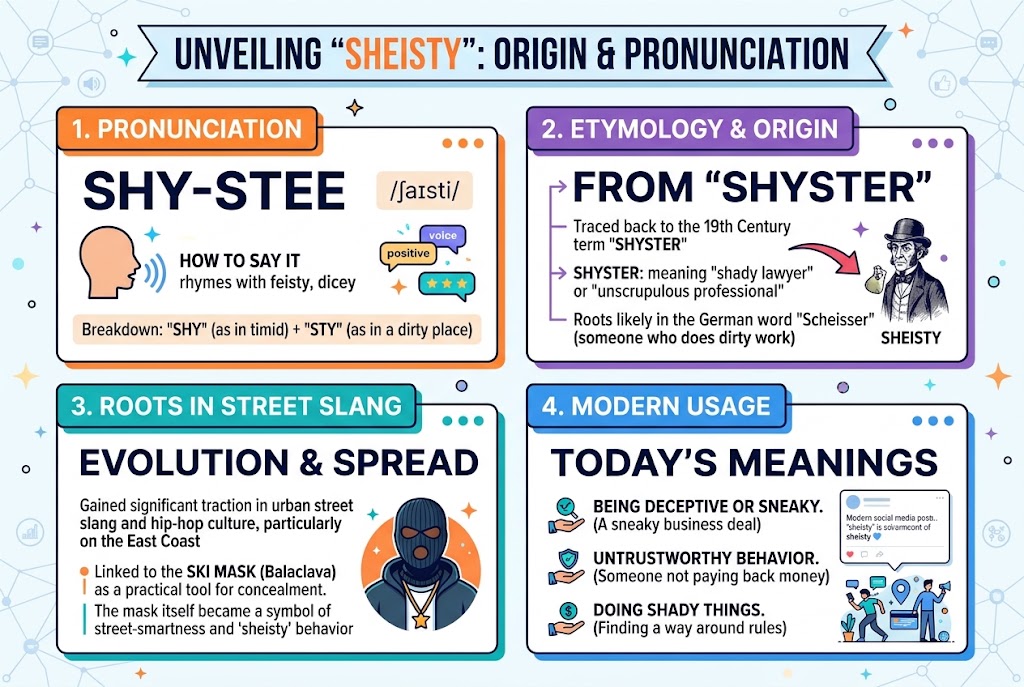
The exact origin of sheisty remains uncertain, and no single authoritative source establishes its first use. The term belongs to informal American slang and describes dishonest or questionable behavior. Avoid treating unverified claims about its origin as established facts.
Pronunciation: Most speakers pronounce sheisty like “shy-stee,” using two syllables.
Both spellings appear in informal writing because people often spread slang through speech, music, and online conversations rather than follow standardized spelling rules.
Is Sheisty a Bad Word or an Insult?
Sheisty is not generally considered profanity, but it usually carries a negative meaning. When you call someone sheisty, you question their honesty or trustworthiness.
Friends might use it jokingly after a harmless trick. During a serious argument, however, the word can sound like a direct accusation of dishonesty.
You can use synonyms such as shady, sneaky, deceitful, underhanded, and untrustworthy. Antonyms include honest, fair, sincere, and dependable.
Frequently Asked Questions
1. What does sheisty mean in simple words?
Sheisty means shady, dishonest, sneaky, or untrustworthy.
2. What does it mean when someone calls you sheisty?
They think you acted unfairly, misled someone, or damaged another person’s trust.
3. Is sheisty the same as shady?
The words have similar meanings. Sheisty often suggests deliberate dishonesty, while shady can describe anything suspicious or questionable.
4. Is sheisty a compliment?
Usually not. People generally use it to criticize someone’s behavior, although friends sometimes use it playfully.
5. Do people still use sheisty in 2026?
People still recognize the term in informal conversations and online contexts, although its popularity varies across communities.
Conclusion
The sheisty meaning centers on dishonest, shady, sneaky, or untrustworthy behavior. People use the word to criticize a person, describe an unfair action, or express doubts about a questionable situation.
When you encounter sheisty or shiesty in a text message, conversation, or rap lyric, consider the context to understand the speaker’s intent. In most cases, the word suggests that someone has acted unfairly or damaged another person’s trust.

