

The BPM meaning is depending on the context. You may see it while listening to music, checking your heart rate, or learning how businesses improve their daily operations. Although the same three letters appear in each case, their meanings are not always the same.
BPM most commonly stands for beats per minute in music and health, while in business and technology, it often means business process management. Understanding the context makes it easier to identify the correct meaning.
This guide explains the BPM full form, its definition, common uses, practical examples, and answers to frequently asked questions.
LEARN MORE : https://grammarlike.com/iy-meaning-in-text/
Quick Answer: What Does BPM Mean?
BPM stands for beats per minute or business process management, depending on the subject.
- Music: BPM measures the speed or tempo of a song.
- Medicine: BPM describes heart rate in beats per minute.
- Fitness: BPM helps measure exercise intensity through heart rate.
- Business: BPM refers to improving and managing business processes.
- Technology: BPM often relates to software that automates workflows and business tasks.
For example, a song recorded at 120 BPM has 120 beats per minute. In a hospital, a heart rate of 75 BPM means the heart beats 75 times in one minute.
BPM Full Form and Definition
The BPM abbreviation has several meanings, but two are especially common.
| Context | BPM full form | Meaning |
|---|---|---|
| Music | Beats per minute | Measures musical tempo |
| Medicine | Beats per minute | Measures heart rate |
| Fitness | Beats per minute | Tracks heart rate during exercise |
| Business | Business process management | Improves business workflows |
| Technology | Business process management | Uses methods and software to manage processes |
| Banking | Business process management | Helps organize and improve banking operations |
The BPM definition depends on how the term is used. In music and medicine, it represents a measurable rate. In business, it describes a management approach rather than a numerical measurement.
What Does BPM Mean in Music?
In music, BPM means beats per minute. It tells listeners and musicians how quickly a piece of music moves.
A lower BPM generally produces a slower feel, while a higher BPM often creates a faster, more energetic sound. However, musical style and rhythm also affect how fast a song feels.
For example:
- 60 BPM: A slow, relaxed tempo.
- 90 BPM: A moderate tempo.
- 120 BPM: A common tempo for dance and pop music.
- 150 BPM: A fast, energetic tempo.
Musicians, DJs, and music producers use BPM to synchronize tracks, plan rhythms, and create consistent musical arrangements.
What Does BPM Mean in Medical Terms?
In medical terms, BPM means beats per minute. It measures how many times the heart beats in one minute.
A resting heart rate is one way healthcare professionals assess cardiovascular health. For many adults, a typical resting heart rate is between 60 and 100 BPM, although age, medication, fitness, and health conditions can affect the result.
For example, if a person’s heart beats 72 times in one minute, their heart rate is 72 BPM.
A single reading does not tell the whole story. Symptoms, activity level, and individual circumstances matter when interpreting heart rate.
What Does BPM Mean in Fitness?
BPM is useful in fitness because it helps people monitor their heart rate during physical activity.
When you walk, run, cycle, or perform another exercise, your heart rate usually increases to supply more oxygen to your muscles. Tracking BPM can help you understand your body’s response to exercise and adjust your effort.
For example, a runner might compare their heart rate during a gentle jog with their heart rate during a faster run.
Fitness watches and heart rate monitors commonly display BPM to help users track their workouts.
What Does BPM Mean in Business and Technology?
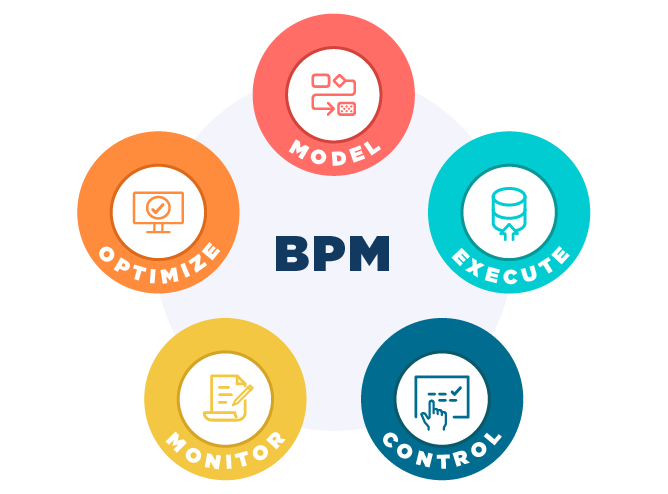
In business, BPM stands for business process management. It is a method of analyzing, organizing, and improving the steps involved in completing work.
Consider a company that processes customer orders. Employees may receive orders, check payments, confirm stock, prepare shipments, and notify customers.
If these steps are slow or repetitive, the company can use BPM to identify delays, remove unnecessary tasks, and automate suitable activities.
BPM software supports this process by helping organizations design workflows, assign tasks, monitor progress, and track performance.
Businesses in banking, healthcare, retail, and other industries use BPM to improve efficiency and provide more consistent services.
BPM vs. RPM: What Is the Difference?
BPM and RPM measure different things.
| Term | Full form | What it measures |
|---|---|---|
| BPM | Beats per minute | Musical beats or heartbeats per minute |
| RPM | Revolutions per minute | Number of complete rotations per minute |
For example, BPM can describe a song’s tempo or a person’s heart rate. RPM can describe how quickly a motor or engine rotates.
Although both terms measure a rate, they are not interchangeable.
Frequently Asked Questions About BPM
1. What does BPM stand for?
BPM stands for beats per minute in music and health, or business process management in business and technology.
2. What is the BPM meaning in simple words?
BPM describes either how many beats occur in one minute or a method for managing and improving business processes.
3. What is a normal BPM for adults?
A typical resting heart rate for adults is 60–100 BPM. Individual readings can vary depending on fitness, medications, and health.
4. What does 120 BPM mean?
In music, 120 BPM means 120 beats occur every minute. For heart rate, it means the heart beats 120 times per minute.
5. How is BPM calculated in music?
Count the beats over a measured period and convert them to one minute. For example, 30 beats in 15 seconds equals 120 BPM.
6. Why is BPM important in business?
Business process management helps organizations reduce delays, improve workflows, automate repetitive tasks, and monitor performance.
Conclusion
The meaning of BPM depends on the subject. It commonly means beats per minute in music, medicine, and fitness, while business process management is the relevant meaning in business and technology.
Understanding the context helps you interpret BPM correctly, whether you are checking a song’s tempo, monitoring heart rate, or learning how organizations improve their operations.

